

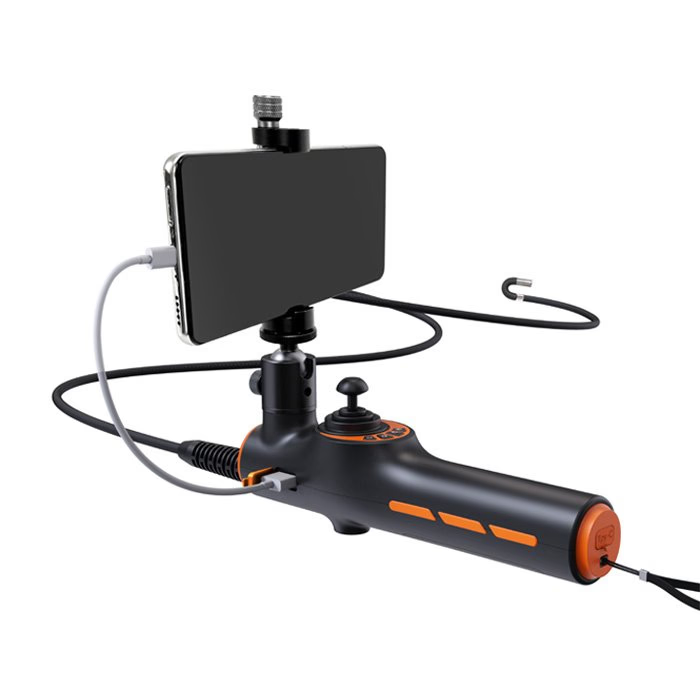
Under Vehicle Inspection Camera for Professional Vehicle Security Checks
A Under Vehicle Inspection Camera is an important security tool for facilities that need to detect hidden objects, suspicious attachments, vehicle tampering or unusual chassis conditions before allowing entry. Whether the requirement is daily vehicle inspection, mobile checkpoint security or manual vehicle search, VARITO provides reliable inspection camera solutions for international security projects.VARITO offers professional Under Vehicle Inspection Camera solutions for vehicle security checks, gate inspection, temporary checkpoints, embassy entrances, airports, government buildings, police operations, border security, military sites and high-security facilities. Designed for practical undercarriage inspection, these camera systems help security teams check the underside of cars, trucks, buses, vans and commercial vehicles more clearly than manual visual inspection alone.
Vehicle Undercarriage Inspection Camera for Security Checkpoints
A Vehicle Undercarriage Inspection Camera helps security operators inspect areas that are difficult to see under a vehicle. Instead of bending down or relying only on manual mirror checks, the operator can use a camera-assisted system to view the underbody more comfortably and clearly.This makes the system useful for security gates, temporary checkpoints, police inspection, embassy entrances, border control points and high-risk access areas where vehicle screening must be fast, accurate and practical.
Clear Underbody Visibility
The underside of a vehicle can hide suspicious objects, attachments or modifications. An under vehicle camera helps operators view these hidden areas and decide whether further inspection is needed.Practical Manual Inspection Support
For locations that do not require a full fixed UVSS installation, a portable or telescopic under vehicle camera can provide a practical inspection solution. It gives security teams better visibility while keeping the inspection process flexible.For automated vehicle underbody scanning, VARITO also provides Under Vehicle Surveillance System solutions.
VARITO Under Vehicle Inspection Camera Solutions
VARITO provides Under Vehicle Inspection Camera solutions for different security environments, vehicle types and inspection needs. These systems are suitable for both permanent security teams and mobile inspection operations.Portable Under Vehicle Inspection Camera
A Portable Under Vehicle Inspection Camera is suitable for flexible vehicle security checks. It can be used at temporary checkpoints, event entrances, hotel gates, police inspection points and mobile security locations.Best suited for
Police checkpoints, hotels, embassies, public venues, temporary gates, border security points and mobile security operations.Telescopic Under Vehicle Camera
A Telescopic Under Vehicle Camera is useful for manual vehicle search. The extendable pole allows the operator to inspect the vehicle underbody from a safer and more convenient position.Best suited for
Gate security, VIP vehicle checks, embassy entrances, military checkpoints, customs inspection and temporary security operations.Under Vehicle Search Camera
An Under Vehicle Search Camera helps security personnel inspect hidden areas underneath vehicles. It is a practical tool for detecting suspicious objects, concealed items and possible underbody tampering.Best suited for
Airports, government buildings, police operations, prisons, border security points and high-security facilities.Under Car Inspection Camera
An Under Car Inspection Camera can be used for cars, vans, SUVs, buses, trucks and commercial vehicles. It helps improve inspection confidence at vehicle entry points and controlled facilities.Best suited for
Commercial gates, factory entrances, logistics hubs, hotels, public venues and security checkpoints.Hidden Object Detection and Vehicle Threat Inspection
The underside of a vehicle is one of the most difficult areas to inspect manually. A camera-assisted inspection tool helps security teams check this area more efficiently and reduces the chance of missing important details.Hidden Object Detection
An under vehicle camera can help operators identify unusual objects, packages, attachments or suspicious items fixed under a vehicle.Vehicle Tampering Inspection
Security teams can use a Vehicle Chassis Inspection Camera to check whether the vehicle underbody has unusual modifications or unexpected changes.Contraband and Prohibited Item Screening
For customs, border security, prisons and government buildings, under vehicle inspection cameras can support screening for prohibited materials or concealed items.Suspicious Vehicle Review
When a vehicle requires closer inspection, the camera view can help operators decide whether manual secondary inspection is necessary.Under Vehicle Inspection Camera for Different Applications
VARITO Under Vehicle Inspection Camera solutions can be used across many security environments where vehicle access must be checked before entry.Airports and Transport Facilities
Airports and transport facilities can use under vehicle inspection cameras to check service vehicles, staff vehicles, VIP vehicles and vehicles entering restricted zones.Embassies and Government Buildings
Embassies and government facilities often need careful vehicle screening at entrance gates. An inspection camera helps improve underbody visibility during vehicle checks.Police and Border Security
Police teams and border security officers can use portable under vehicle cameras for mobile checkpoints, suspicious vehicle inspection and temporary road control operations.Military Bases and Prisons
Military sites and prisons require strong vehicle access security. Under vehicle cameras support inspection for hidden items, modifications and suspicious attachments.Hotels and Public Venues
Hotels, event venues, stadiums and public buildings can use under vehicle inspection cameras for VIP events, temporary security operations and controlled vehicle entrances.Industrial Gates and Logistics Hubs
Factories, warehouses and logistics hubs can use under vehicle cameras to inspect trucks, vans and commercial vehicles entering the facility.Under Vehicle Inspection Camera vs Under Vehicle Inspection Mirror
Both camera systems and mirrors are used for vehicle underbody inspection, but they serve different inspection needs.Under Vehicle Inspection Camera
An inspection camera provides a clearer viewing experience and can support camera-assisted inspection in areas where visibility is limited. It is useful when operators need more detail, better angle control or easier viewing.Under Vehicle Inspection Mirror
An Under Vehicle Inspection Mirror is a simple and cost-effective tool for manual underbody inspection. It is suitable for basic vehicle checks and quick visual inspection.Choosing the Right Tool
Choose an under vehicle inspection camera when better visibility and camera-assisted viewing are required. Choose an inspection mirror when the site needs a simple manual inspection tool. For automated scanning, consider fixed or portable UVSS solutions.Complete Vehicle Security with VARITO
An under vehicle inspection camera can be part of a complete vehicle checkpoint security setup. VARITO provides multiple security and automation products that help strengthen access control and site protection.Fixed and Portable UVSS
For automated underbody scanning, VARITO offers Fixed Type UVSS for permanent gate lanes and Portable Type UVSS for mobile or temporary vehicle inspection.Vehicle Barrier and Gate Control
For controlled vehicle access, VARITO Car Parking Barrier, Road Blocker, Tyre Killer and Hydraulic Bollard solutions can support stronger vehicle entry management.Key Benefits of Under Vehicle Inspection Cameras
A professional under vehicle inspection camera should help security teams improve visibility, reduce inspection difficulty and support safer vehicle access control.Better Undercarriage Visibility
The camera helps operators inspect hard-to-see areas under vehicles more clearly than basic visual checking.Flexible Security Operation
Portable and telescopic camera options support temporary checkpoints, mobile operations and manual vehicle search.Faster Vehicle Inspection
Camera-assisted inspection can make underbody checks more efficient at gates and security checkpoints.Suitable for Multiple Vehicle Types
VARITO inspection camera solutions can support cars, vans, SUVs, buses, trucks and commercial vehicles.Professional Security Confidence
A structured under vehicle inspection process improves site security and creates a more professional checkpoint experience.Choose VARITO as Your Under Vehicle Inspection Camera Supplier
VARITO provides professional Under Vehicle Inspection Camera solutions for international security and automation projects. Our systems support vehicle undercarriage inspection, hidden object detection, temporary checkpoint security and manual vehicle search operations.Whether your project requires a Portable Under Vehicle Inspection Camera or complete vehicle security checkpoint solution, VARITO helps you choose the right inspection technology for your facility.
Build Safer Vehicle Security Checks with VARITO
An under vehicle inspection camera helps organizations inspect vehicles more effectively before entry. With portable operation, improved underbody visibility and practical inspection support, VARITO under vehicle inspection cameras are suitable for airports, embassies, hotels, police checkpoints, border security, government buildings, industrial gates and high-security facilities worldwide.Explore VARITO under vehicle inspection camera solutions to build a safer, smarter and more professional vehicle security inspection process.
Key Applications
Under Vehicle Inspection Camera
VARITO offers professional Under Vehicle Inspection Camera solutions for vehicle security checks, gate inspection, temporary checkpoints, embassy entrances, airports, government buildings, police operations, border security, military sites and high-security facilities. Designed for practical undercarriage inspection, these camera systems help security teams check the underside of cars, trucks, buses, vans and commercial vehicles more clearly than manual visual inspection alone.
Explore Under Vehicle Inspection Camera →