
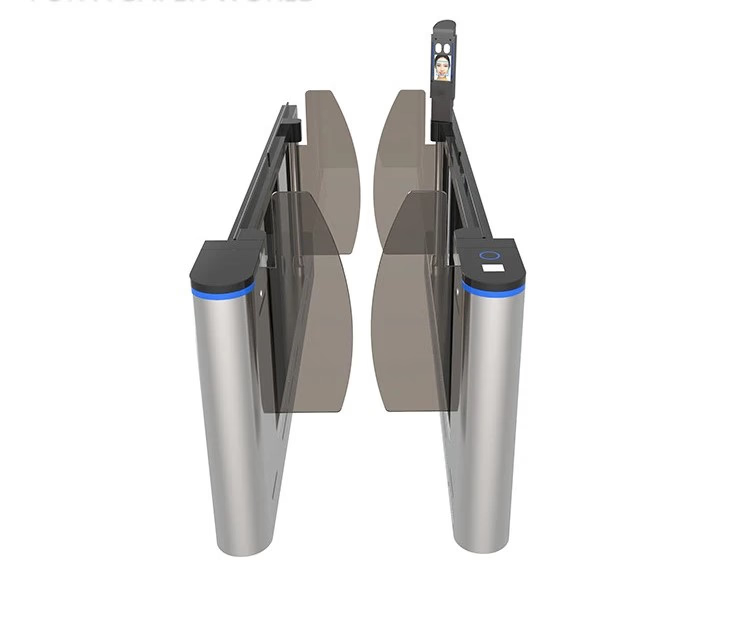
Model:
VT-M300
VT-M300 swing gate which is made of metal+painting and acrylic in a modern style. It has anti-collision and anti-clamp function. It can sensitively detect users' passing status so as to protect users from hitting, meanwhile, prevent illegal intrusion and tail-gating passing
<h2>Product Details:</h2>
<table width="555">
<tbody>
<tr>
<td><strong>Brand:</strong></td>
<td>Varito</td>
</tr>
<tr>
<td><strong>Model</strong></td>
<td>VT-M300 </td>
</tr>
<tr>
<td><strong>Product Size:</strong></td>
<td> 2400*185*960mm</td>
</tr>
<tr>
<td><strong>Arm Material</strong></td>
<td>10MM Tawny Acrylic</td>
</tr>
<tr>
<td><strong>Throughput Rate:
</strong></td>
<td>35p/m
</td>
</tr>
<tr>
<td><strong>Power Supply:
</strong></td>
<td>100-240V(AC)</td>
</tr>
</tbody>
</table>
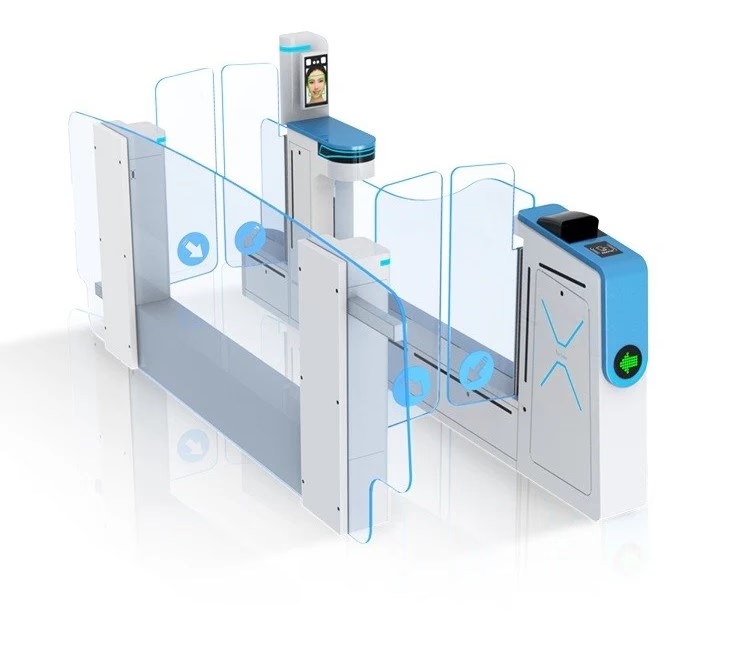
Model:
VT-M366
VT-M366 swing turnstile which is made of metal+painting and acrylic in a modern style. It has anti-collision and anti-clamp function.The power-off door pendulum can be opened directly to meet the needs of fire escapes. It can sensitively detect users' passing state so as to protect users from hitting, meanwhile, prevent illegal intrusion and tail-gating passing or submarine returning.
<h2>Product Details:</h2>
<table width="555">
<tbody>
<tr>
<td><strong>Brand:</strong></td>
<td>Varito</td>
</tr>
<tr>
<td><strong>Model</strong></td>
<td>VT-M366 </td>
</tr>
<tr>
<td><strong>Product Size:</strong></td>
<td>2700*200*1300mm</td>
</tr>
<tr>
<td><strong>Arm Material</strong></td>
<td>10mm Tempered PC</td>
</tr>
<tr>
<td><strong>Operating Temperature:
</strong></td>
<td>-20 To +70 Degrees
</td>
</tr>
<tr>
<td><strong>Power Supply:
</strong></td>
<td>24V 240W</td>
</tr>
</tbody>
</table>
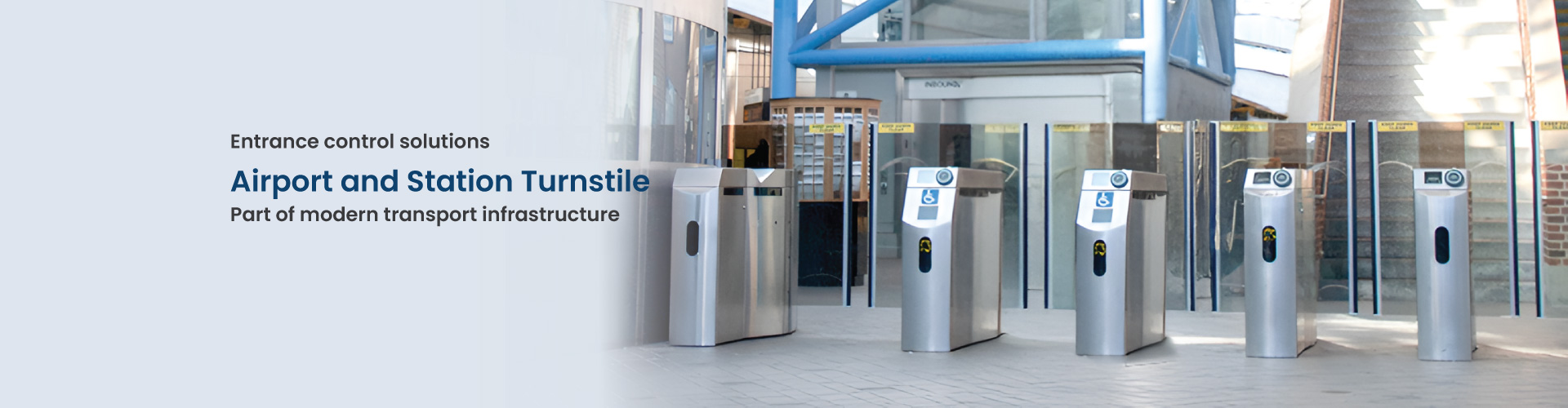
Airport and Metro Station Turnstile
Airports and Metro Stations are among the busiest public facilities in any country. Every day, thousands of passengers move through entrances, ticket checkpoints, boarding zones, platforms, and restricted staff areas. Without a controlled entry system, transport hubs can face serious problems such as ticketless entry, overcrowding, queue chaos, unauthorized access, and safety risks. That is why the Airport and Metro Station Turnstile has become an essential part of modern transport infrastructure. A turnstile system in airports and train stations is designed to manage passenger flow, validate tickets quickly, prevent unauthorized entry, and create an organized, safe boarding experience. In simple terms, it ensures “one passenger, one valid ticket/permission, one entry.” Unlike basic access control gates used in offices, airport and station turnstiles are built for high traffic, faster processing, and integration with ticketing systems. They can support multiple validation methods such as QR code, barcode, NFC, smart cards, mobile tickets, and even biometric verification—depending on the project requirements.What is an Airport and Metro Station Turnstile?
An Airport & Metro Station Turnstile is an automated entrance gate system installed at transport hubs to control passenger access into paid or restricted zones. It verifies a passenger’s ticket or authorization and then opens the lane for a single entry. Once the passenger passes, the gate closes automatically. These turnstiles are commonly used for:- Ticketed entry to platforms or boarding areas
- Passenger flow control during peak hours
- Revenue protection (prevent ticketless travel)
- Access restriction to staff-only zones
- Safety management in crowded transport environments
How it Works
- Passenger approaches the gate
- Passenger presents a valid ticket or credential (QR, smart card, NFC, barcode, etc.)
- The system validates the ticket in milliseconds (online or offline rules)
- The gate opens (flap retracts, swing arm opens, or tripod releases)
- Passenger walks through
- Gate closes and logs the transaction (entry count, time, gate ID)
Why Turnstiles Matter in Airports and Metro Stations
Transport hubs have unique challenges that make turnstiles non-negotiable:1) High Passenger Volume
Airports and stations must handle thousands of entries per hour. A turnstile reduces manual checking and speeds up movement.2) Ticket Validation and Revenue Protection
When entry is controlled by automated validation, it becomes much harder for passengers to enter without paying or using valid tickets.3) Crowd Discipline and Queue Management
Turnstiles create structured lanes and reduce random crowd movement, making the facility safer and easier to manage.4) Security and Restricted Area Control
Airports in particular have sensitive zones. Turnstiles help enforce permissions for staff, vendors, and authorized personnel.5) Better Passenger Experience
Modern passengers expect fast and contactless entry. Turnstiles support mobile QR tickets, NFC, and quick scanning for smoother journeys.Common Types of Airport & Metro Station Turnstile Gates
Transport hubs choose gates based on traffic, security level, space, and accessibility requirements. The most common options include:1) Flap Barrier Turnstile (Most Popular)
Best for: high throughput, modern terminals, clean design How it works: retractable flaps open after ticket validation Why it’s used: fast entry, premium look, strong lane discipline2) Swing Barrier Gate (Best for Wide Lanes)
Best for: wheelchair access, luggage/trolley movement, family entry lanes How it works: arm/panel swings open like a door Why it’s used: accessible, safer flow for passengers carrying bags3) Tripod Turnstile (Budget & Controlled Entry Zones)
Best for: controlled station entrances, staff entry, secondary zones How it works: rotating arms allow one pass Why it’s used: durable and cost-effective, but less premium4) Speed Gate (Premium High-Speed Turnstile)
Best for: airports, premium rail terminals, VIP zones How it works: high-performance motor + advanced sensors for faster operation Why it’s used: high throughput, advanced safety, premium passenger experience5) Full Height Turnstile (Perimeter / High-Security Outdoor Zones)
Best for: staff-only entrances, maintenance areas, secure perimeters How it works: full-height rotating barrier Why it’s used: maximum physical security, anti-climb designTicket Validation Technologies Used in Turnstiles
An Airport Train Station Turnstile can support multiple methods depending on the ticketing ecosystem:QR Code / Barcode (Most Common)
- Works with printed tickets and mobile tickets
- Fast scanning and easy integration
- Ideal for both rail and airport bus/train connections
NFC / Contactless Smart Card
- Tap-and-go entry
- Very fast throughput
- Suitable for public transport cards and season passes
Mobile Ticketing Apps
- QR/NFC from smartphone
- Supports wallets and e-tickets
- Best for modern passengers and reduced paper usage
RFID Cards (Staff & Membership Passes)
- Useful for staff access control
- Can integrate with attendance and shift logs
- Supports zone-based permissions
Biometric Integration (Optional, Advanced)
- Face or fingerprint-based access (mostly for staff zones)
- Useful for high-security areas and identity validation workflows
Key Features of a High-Quality Turnstile
When selecting turnstiles for transport hubs, these features matter most:1) High Throughput Performance
- Fast open/close cycle
- Stable motor performance
- Designed for continuous daily operation
2) Advanced Safety Sensors
- Multi-beam infrared sensors
- Anti-pinch / anti-hit detection
- Obstruction detection to protect passengers
3) Anti-Tailgating and Wrong-Direction Control
- Prevents two passengers passing on one ticket
- Detects reverse entry attempts
- Triggers alarms or locks lane when required
4) Strong Build Quality for Public Use
- Stainless steel housing
- Vandal-resistant design
- Durable glass/acrylic flaps (where used)
5) Accessibility Support
- Wide lanes for wheelchairs and luggage
- Smooth entry for elderly passengers
- Clear visual indicators and audio prompts
6) Online/Offline Ticketing Logic
- Online validation for real-time rules
- Offline fallback (cached rules) during network issues
- Helps maintain operations even during system disruption
7) Central Monitoring and Reporting
- Real-time gate status monitoring
- Passenger count, peak-time analytics
- Fraud attempts logs and audit trails
Benefits of Station Turnstiles
Faster Passenger Flow
Automated validation is quicker than manual checks. It reduces queue time and improves throughput during rush hours.Better Security and Controlled Zones
Turnstiles restrict access to paid areas and sensitive zones, improving overall safety and compliance.Reduced Operational Costs
Less dependency on manual checking staff at every point, while still maintaining strong control.Accurate Passenger Data
Turnstiles generate reliable data:- Entry count per gate
- Time-based rush patterns
- Ticket type usage trends
Improved Customer Experience
Modern gates support contactless entry, clear lane indicators, and faster movement—reducing frustration and confusion.Typical Placement Areas
Metro Stations
- Main entry to paid area/platform
- Interchange corridors
- Special event crowd control points
- Staff-only technical access routes
Airports
- Staff entrances to restricted zones
- Airport rail link entrances (if applicable)
- Controlled access for service vendors
- Specific zones requiring authorization (back-of-house)
How to Choose the Right Turnstile for Your Project
Use this practical checklist:1) Passenger Volume and Peak Rush
- Medium to high traffic: flap barrier or speed gates
- Lower traffic: tripod or basic swing lanes
- Mixed flow: combine flap gates + one wide swing lane
2) Accessibility Requirements
Always include at least one wide lane for:- Wheelchair users
- Luggage and trolleys
- Family entry or special assistance passengers
3) Ticketing Method
Choose validator type based on your system:- QR/barcode scanners for printed + mobile tickets
- NFC for contactless cards and season passes
- Combined readers for flexible future upgrades
4) Environment and Durability
Public areas require:- Vandal-resistant design
- Stable performance under continuous daily use
- Easy maintenance and spare part availability
5) Operations and Maintenance
Select a solution that supports:- Remote diagnostics
- Fast spare parts replacement
- Easy firmware/software updates
- Clear troubleshooting indicators for staff
Installation and Operational Best Practices
- Design lanes with clear entry/exit signage
- Add queue rails to maintain orderly lines
- Use LED arrows and audible prompts
- Ensure proper grounding and surge protection
- Provide UPS backup and a clean power line
- Test anti-tailgating and wrong-direction logic thoroughly
Final Thought
An Airport Train Station Turnstile is more than a gate—it is a complete passenger control and ticket validation system that improves security, protects revenue, and keeps traffic moving smoothly. With the right combination of flap barriers, swing gates for accessible lanes, and high-speed gates for peak flow, transport hubs can create a safer and more efficient entry experience.Key Applications
Airport and Metro Station Turnstile 1
ggfhg fghgfh gfhgfhgh fghg
Explore Airport and Metro Station Turnstile 1 →
Airport and Metro Station Turnstile 1
Airport and Metro Station Turnstile 2
Frequently Asked Questions
Flap barrier turnstiles are most common due to fast throughput and modern lane control. Wide swing lanes are added for accessibility.
Yes. Most modern systems support QR/barcode scanning for both printed tickets and mobile e-tickets.
They can, if configured with offline validation rules and supported by backup power and proper redundancy planning.