
Automatic Boom Barrier Gate for Vehicle Access Control
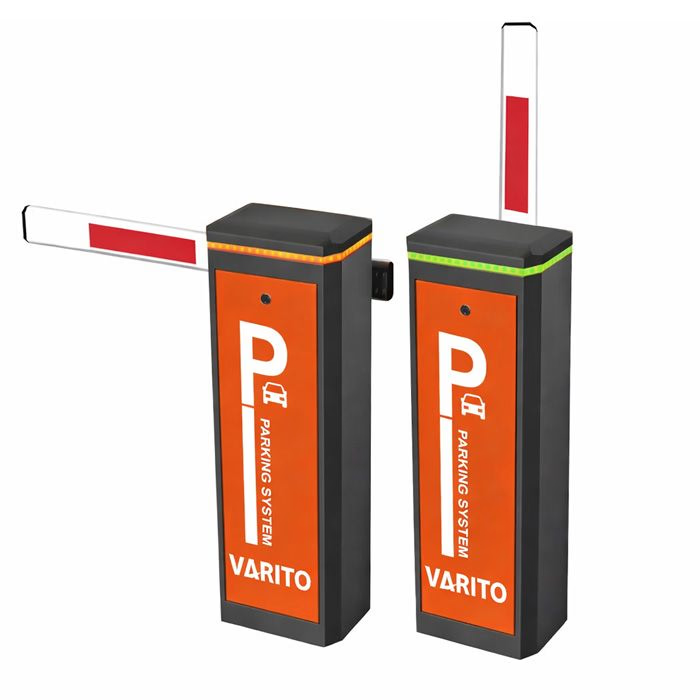
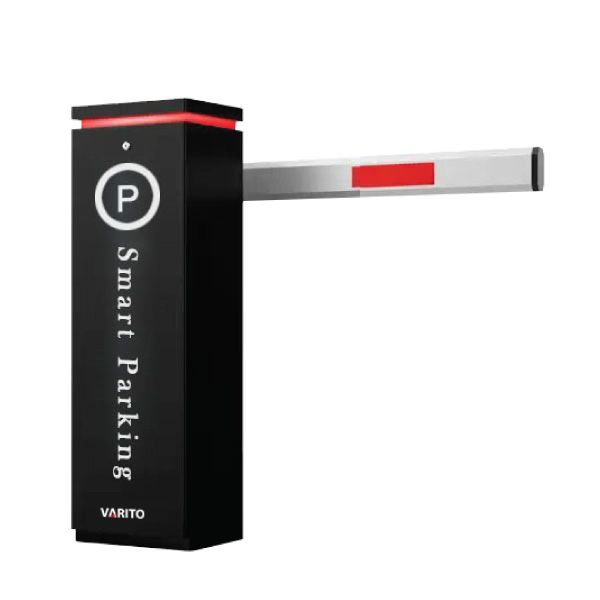
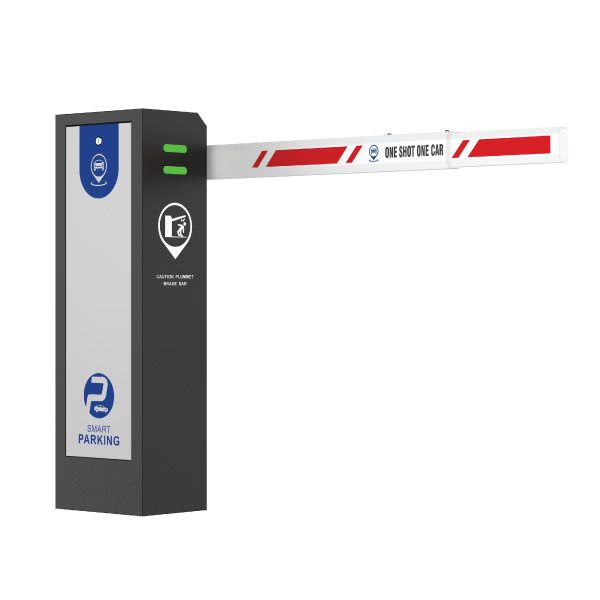
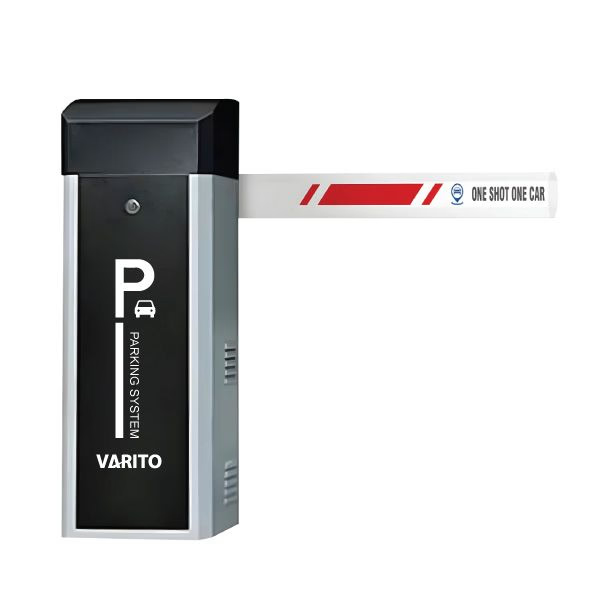
Automatic Boom Barrier Gates provide fast, controlled and reliable vehicle access for parking areas, residential complexes, office buildings, factories, logistics facilities and public premises. VARITO offers professional barrier gate solutions for international security and automation projects, with options for different lane widths, operating speeds, traffic volumes and access methods.
Choose a standalone parking barrier or integrate the gate with Car Parking Automation, RFID readers, ANPR cameras, ticketing equipment, safety sensors and parking management systems. VARITO helps system integrators, contractors, distributors and facility operators build secure and scalable vehicle entry and exit solutions.
Automatic Boom Barrier Gates for Secure Vehicle Entry
A boom barrier gate creates a visible physical control point at a vehicle entrance or exit. Its horizontal arm remains lowered when access is restricted and rises after an authorized signal is received. Depending on the project, authorization may come from a remote control, push button, RFID credential, UHF vehicle tag, ANPR camera, ticketing system or parking controller.
This controlled process helps organize traffic, prevent unauthorized vehicle movement and reduce reliance on manual gate operation. An automatic barrier gate can be installed at a single entrance or used as part of a multi-lane parking and vehicle access control system.
Suitable for Parking and Perimeter Access
VARITO barrier gates can support commercial parking entrances, employee vehicle access, residential parking, visitor management and controlled industrial lanes. They are suitable wherever vehicles must stop, receive authorization and pass through a managed access point.
For a wider solution covering identification, entry, exit and parking operations, explore the VARITO Parking Access Control System.
Choose the Right Type of Boom Barrier Gate
Lane width, ceiling height, opening speed and daily traffic volume determine which barrier design is most suitable. Selecting the correct boom type helps improve safety, reliability and long-term operating performance.
Straight Boom Barrier Gate
A straight boom barrier is the standard choice for outdoor entrances and parking lanes with sufficient overhead clearance. Straight arms are commonly used for offices, factories, hotels, residential properties, public parking areas and commercial buildings.
This design is available for different lane widths and can be combined with reflective strips, LED indicators, safety sensors and access control devices.
Folding Boom Barrier Gate
A folding or articulated boom barrier is designed for indoor parking areas and basement entrances where ceiling height is limited. The arm folds as it rises, allowing the barrier to operate without touching pipes, beams, ventilation systems or structural elements above the lane.
Before selecting a folding model, both the lane width and available ceiling height should be measured carefully.
Telescopic Boom Barrier Gate
A telescopic boom arm provides greater flexibility when the lane width differs from standard dimensions. It can be adjusted within the supported range, making it useful for customized entrances, renovation projects and locations where a fixed-length arm may not fit correctly.
Fence Boom Barrier
A fence boom barrier includes additional vertical elements below the main arm. It creates a more visible and complete lane closure than a standard horizontal boom. This design can be useful at restricted entrances, industrial sites and locations where additional deterrence is required.
High-Speed Boom Barrier Gate
A high-speed boom barrier gate is suitable for busy entry and exit lanes where vehicles must be processed quickly. Faster movement can help reduce queues at shopping malls, factories, office campuses, residential communities, toll-style lanes and transport facilities.
Opening speed should always be selected together with the boom length, motor capacity, duty cycle and required safety devices.
How an Automatic Boom Barrier Gate Works
An automatic parking barrier follows a simple but configurable access workflow. The exact process depends on the connected identification and control technology.
- A vehicle approaches the controlled lane.
- An access device identifies the vehicle or receives an opening request.
- The controller checks the authorization signal.
- The boom arm rises and permits the vehicle to pass.
- A loop detector or safety sensor confirms that the lane is clear.
- The barrier arm returns to the closed position.
This process can be fully automatic or supervised by a guard. For private or low-traffic entrances, remote or push-button control may be sufficient. Commercial parking and high-security facilities may require RFID, number plate recognition, ticket validation or software-based access rules.
Main Components of a Boom Barrier System
Barrier Cabinet and Motor
The cabinet protects the motor, transmission, control board and mechanical components. Motor type, operating speed and duty cycle should match the expected frequency of use.
Boom Arm
The boom arm physically blocks the lane. Its length and design must match the entrance width, overhead clearance and required level of visibility.
Control Board
The control board receives opening and closing signals, manages movement and communicates with access devices and safety components.
Vehicle and Safety Sensors
Loop detectors, photocells and other sensors help detect vehicles and reduce the risk of the arm closing while a vehicle is still inside the passage area.
Important Features for Reliable Barrier Gate Operation
A boom barrier should be evaluated as part of a complete vehicle control system rather than only by appearance or boom length. Reliable operation depends on motor performance, safety, environmental protection and integration capability.
Opening and Closing Speed
Fast barriers are useful for high-volume lanes, while longer arms may require a slower and more controlled movement. The correct speed helps maintain traffic flow without creating unnecessary mechanical stress or safety risks.
Duty Cycle and Motor Durability
Daily traffic volume directly affects the required duty cycle. A barrier for a small residential property does not face the same workload as a gate at a factory, shopping mall or logistics facility. High-traffic sites should use a model designed for frequent opening and closing.
Adjustable Boom Length
Boom length must match the usable lane width. An arm that is too short may leave an uncontrolled gap, while an oversized arm can increase movement time and mechanical load. Straight, telescopic and folding options make it easier to match different site conditions.
Weather and Corrosion Protection
Outdoor automatic barriers need suitable protection against rain, dust, heat, humidity and corrosion. Correct drainage, stable foundations and protected electrical connections are also important for dependable operation.
Manual Release and Power Backup
Emergency manual release allows authorized personnel to operate the barrier during a power interruption or system fault. A UPS or suitable backup power solution can help maintain automatic operation at critical access points.
Boom Barrier Safety and Vehicle Protection
Safety should be planned before the barrier is installed. A reliable system needs to detect vehicles, keep the passage clear and respond appropriately when an obstruction is present.
Loop Detector Integration
A vehicle loop detector identifies the presence or movement of a vehicle within a defined area of the lane. It can be used to trigger opening, confirm vehicle passage or prevent the barrier from closing too early.
Photocell and Infrared Protection
Photocells create a detection line across the passage. When a vehicle or object interrupts the beam, the controller can delay or reverse the closing movement.
Auto-Reverse and Resistance Detection
Depending on the selected barrier and accessories, resistance detection or additional safety sensors can help the arm stop or reverse after encountering an obstruction.
Visible Barrier Arms
Reflective strips, high-contrast finishes and LED boom lights improve visibility in dark parking areas, at night and during poor weather. Relevant components can be selected from the VARITO Car Barrier Accessories range.
Compare Boom Barrier Gate Options
| Barrier Type | Best Application | Main Advantage | Important Consideration |
|---|---|---|---|
| Straight boom barrier | Outdoor parking and standard lanes | Simple and versatile design | Requires sufficient overhead clearance |
| Folding boom barrier | Basement and indoor parking | Works under low ceilings | Ceiling height must be measured |
| Telescopic boom barrier | Customized lane widths | Adjustable arm length | Adjustment range depends on model |
| Fence boom barrier | Restricted and industrial entrances | More complete lane closure | Requires suitable operating space |
| High-speed boom barrier | Busy commercial entry and exit lanes | Reduces vehicle processing time | Safety sensors and duty cycle are critical |
| Heavy-duty boom barrier | Factories, logistics yards and continuous-use sites | Designed for demanding operation | Motor and maintenance requirements must be reviewed |
RFID, ANPR and Ticketing Integration
An automatic boom barrier becomes more effective when it is connected to the correct vehicle identification and parking management technology. VARITO supports multiple integration options for permanent users, visitors, paid parking and high-security locations.
ANPR Boom Barrier Gate
An ANPR or LPR Camera reads a vehicle’s license plate and sends the recognized number to the access system. Authorized plates can trigger the barrier automatically, enabling hands-free access without a physical card or tag.
ANPR integration is suitable for offices, hotels, residential properties, industrial sites, visitor management and ticketless parking applications.
UHF RFID Boom Barrier Gate
A Long Range UHF Card Reader identifies a compatible vehicle tag from a distance. Registered vehicles can be verified as they approach the entrance, reducing the need to stop and present a card manually.
UHF RFID is particularly useful for employee vehicles, residents, fleet vehicles, logistics operations and other recurring users.
Ticketing Parking Barrier System
Public and paid parking facilities can connect the barrier with a Parking Ticket Dispenser Machine. The entry station issues a ticket or credential, while the exit barrier opens after the required validation or payment process is completed.
Remote and Guard-Controlled Access
Remote controls, push buttons and intercom systems provide a practical option for smaller facilities and guard-operated entrances. These methods can also remain available as a manual override within a more advanced automated system.
Automatic Boom Barriers for Different Applications
Vehicle access requirements vary by industry, property type and security level. The barrier, boom arm, access method and safety system should therefore be selected around the actual operating environment.
Commercial Parking and Shopping Malls
Shopping malls and public parking facilities need rapid entry, reliable exit control and integration with ticketing or payment systems. High traffic volume may require fast opening, durable motors and multiple safety sensors.
Residential Complexes and Gated Communities
Residential parking can use RFID, UHF vehicle tags, ANPR whitelists, intercom approval or remote control. The objective is to provide convenient resident access while keeping unauthorized vehicles outside the property.
Office Buildings and Business Parks
Office parking barriers help separate employee, visitor and service-vehicle access. Access schedules, vehicle records and visitor approval can be managed through connected control systems.
Factories, Warehouses and Logistics Facilities
Industrial entrances often require durable barrier gates capable of handling frequent vehicle movements. Integration with UHF identification, ANPR, guard control or logistics software can improve fleet and delivery management.
Hospitals, Hotels and Educational Facilities
These locations need a balance between security and convenient visitor access. Ticketing, plate recognition, staff credentials and guarded control can be combined according to the site’s operating rules.
Airports and Transport Facilities
Transport environments may contain staff lanes, public parking, service entrances and restricted vehicle zones. Multi-lane barrier systems can help separate these traffic groups and apply different authorization methods.
How to Select an Automatic Boom Barrier Gate
The right barrier should be selected from project requirements rather than price alone. Confirming the following points before purchase helps avoid incorrect arm dimensions, slow traffic flow and incompatible integrations.
Measure the Lane and Installation Area
Confirm the usable lane width, foundation position, cabinet location and overhead clearance. Basement entrances may require a folding arm, while wide outdoor lanes may need a longer straight or telescopic boom.
Calculate the Expected Traffic Volume
Estimate the number of opening and closing cycles during normal and peak periods. Busy commercial and industrial sites need a higher duty cycle than small residential entrances.
Select the Access Method
Choose between remote control, push button, RFID card, long-range UHF tag, ANPR camera, ticketing or a combination of methods. The correct choice depends on whether users are permanent, temporary, registered or paying visitors.
Define the Required Safety Level
Review loop detectors, photocells, resistance detection, emergency release, LED visibility and backup power requirements. Safety devices should match the traffic conditions and lane layout.
Plan Future Integration
A barrier may initially operate as a standalone device but later need software, ticketing, ANPR or multiple-lane management. Selecting compatible controls and interfaces from the beginning makes future expansion easier.
Include Parking Guidance Where Required
Large car parks can combine entrance control with a Car Parking Guidance System that directs drivers toward available spaces. This creates a more complete parking experience from vehicle entry to space allocation.
VARITO Automatic Boom Barrier Gate Solutions
VARITO supplies automatic boom barrier gates and related parking automation technologies for international projects. The product range supports standard parking entrances, wide lanes, indoor parking, high-traffic access points and integrated vehicle control systems.
Project buyers can combine VARITO barriers with ANPR/LPR cameras, long-range UHF readers, ticketing equipment, parking guidance systems and safety accessories. This modular approach makes it possible to build a solution for a single vehicle lane or a larger multi-entry parking facility.
Support for International Security and Automation Projects
VARITO works with system integrators, distributors, contractors, consultants and facility operators. Share the lane width, traffic volume, required opening speed, access method and installation environment to identify a suitable barrier configuration.
Request a Boom Barrier Gate Solution
Improve vehicle access control with a reliable automatic parking barrier designed around your site requirements. Contact VARITO for product selection, project consultation and a quotation for commercial, residential, industrial or public vehicle access applications.
Key Applications
Vehicle Access Control System
The VARITO Boom Barrier Gate helps control authorized vehicle access, reduce unauthorized entry, and improve traffic flow at busy entrances and exits. It can be integrated with RFID readers, access cards, ANPR/LPR cameras, remote controls, ticketing systems, parking management software, loop detectors, and vehicle access control systems.
Explore Vehicle Access Control System →